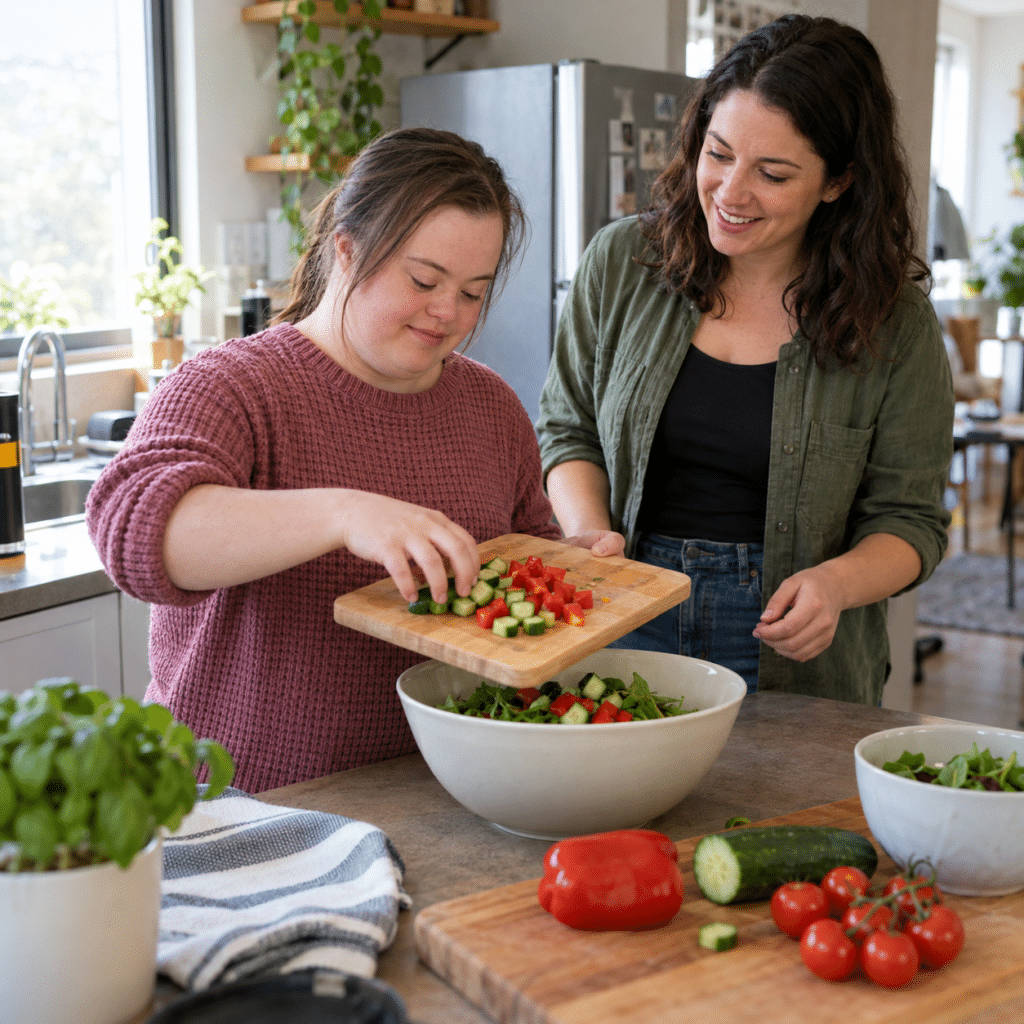
For adults with intellectual and/or developmental disabilities (I/DD), becoming more independent often begins with learning practical skills for everyday life. Independent Living Service helps individuals develop the abilities needed to manage household responsibilities, make decisions, and become more self-sufficient. For some, the goal may be living completely independently without ongoing support. Others may benefit from becoming more capable in specific areas. Understanding who can benefit from ILS can help families determine whether this service may be appropriate for someone they love.
Who Is Independent Living Service Designed For?
Independent Living Service, commonly called ILS, supports adults with developmental disabilities who can benefit from learning and practicing skills needed for independent adult life.
Some individuals already manage many responsibilities but need help developing specific abilities. Others may be preparing to take on household responsibilities for the first time.
ILS can be particularly helpful for adults who want to rely less on family members for everyday tasks or who need additional practice completing responsibilities consistently.
The focus is on developing practical abilities that support greater independence.
What Are Signs Someone Might Benefit From ILS?
Families often recognize the need for independent living instruction through everyday experiences.
An adult might know how to prepare a simple meal but struggle to plan meals for the week. Someone else may understand household chores but have difficulty completing them without reminders.
Signs that additional instruction may be helpful include:
- Difficulty keeping up with cleaning, laundry, or household organization
- Limited experience preparing meals or planning grocery purchases
- Challenges budgeting, paying bills, or managing expenses
- Trouble organizing daily responsibilities
- Needing instruction in personal hygiene or managing personal belongings
- Limited knowledge of household safety or emergency preparedness
- Wanting to live independently but lacking certain practical skills
These challenges do not necessarily mean someone cannot live independently. They may identify areas where instruction and practice could make a meaningful difference.
Can ILS Help Someone Prepare to Live Alone?
Yes. Preparing to live alone can be an important goal of Independent Living Service.
Living independently requires more than having a place to stay. It involves maintaining a household, managing money, preparing meals, following personal routines, and handling everyday responsibilities.
For example, an adult preparing to move into an apartment may need to learn how to manage monthly expenses, maintain a clean living space, and plan meals.
Developing these skills can make the transition to independent living more manageable.
Complete independence without ongoing assistance may be an achievable goal for some individuals. Others may continue to benefit from support in certain areas. The appropriate outcome depends on the person’s abilities, circumstances, and goals.
What If Someone Already Knows These Skills?
Knowing how to complete a task and consistently completing it are not always the same thing.
An individual may understand how to do laundry but frequently forget to wash clothes. Another person might know how to cook but struggle to plan meals or purchase ingredients.
In these situations, ILS may focus on developing routines, organization, and consistency rather than teaching entirely new skills.
For example, an individual might practice creating a weekly household schedule and completing responsibilities with decreasing assistance.
This can be especially helpful for adults who have many independent living abilities but still depend on family members to organize their daily lives.
Why Does ILS Focus on Teaching Rather Than Doing?
The purpose of ILS is to help individuals develop abilities they can use independently.
When someone else routinely completes a task, the immediate responsibility gets handled, but the individual may miss an opportunity to learn.
Instead of cleaning someone’s kitchen, for example, support staff might demonstrate how to organize supplies, practice the process together, and gradually encourage the individual to complete the task independently.
Progress may require repetition, and some skills take longer to develop than others. The goal is to build confidence and ability through practical experience.
How Can Families Encourage Greater Independence?
Families often provide years of assistance with everyday responsibilities. As an adult develops new abilities, it can be difficult to know when to help and when to allow more independence.
A few approaches can encourage progress:
- Allow extra time for the individual to complete tasks
- Encourage personal choices about everyday routines
- Recognize progress without expecting perfection
- Provide opportunities to practice familiar skills
- Avoid taking over responsibilities the individual can manage
Supporting independence does not mean withholding necessary assistance. It means recognizing opportunities for individuals to take greater responsibility for their own lives.
Building Skills for a More Independent Future
Canaan Cares provides Independent Living Service in San Diego County through the San Diego Regional Center. Instruction focuses on practical abilities that help adults become more self-sufficient in everyday life.
Individual goals guide the process because everyone begins with different abilities, experiences, and priorities.
For families considering ILS, the most important question is not whether an individual can already manage every responsibility independently. It is whether learning and strengthening specific skills could help that person work toward greater independence.
Canaan Cares supports individuals as they build those abilities, whether the goal is managing more everyday responsibilities or eventually living independently without ongoing support.
If you are interested in learning more about independent living services in San Diego County and the surrounding areas, please contact the compassionate staff at Canaan Cares today: (858) 345-6546.
Canaan Cares proudly serves California Regional Centers throughout San Diego, Poway, Oceanside, Escondido, Carlsbad, El Cajon, Vista, Solana Beach, Encinitas, La Mesa, and Los Angeles, Orange, San Bernardino, San Diego, and Riverside Counties.
To begin the eligibility process in your region, contact:
San Diego Regional Center
(858) 576-2996
Regional Center of Orange County
(714) 796-5100
Inland Regional Center
(909) 890-3000
Harbor Regional Center
(310) 543-0100
South Central Los Angeles Regional Center
(213) 744-7000
Eastern Los Angeles Regional Center
(626) 299-4700
Lanterman Regional Center
(213) 383-1300
Westside Regional Center
(310) 258-4000
Families may call any office for support, and staff will direct you to the correct intake coordinator.
