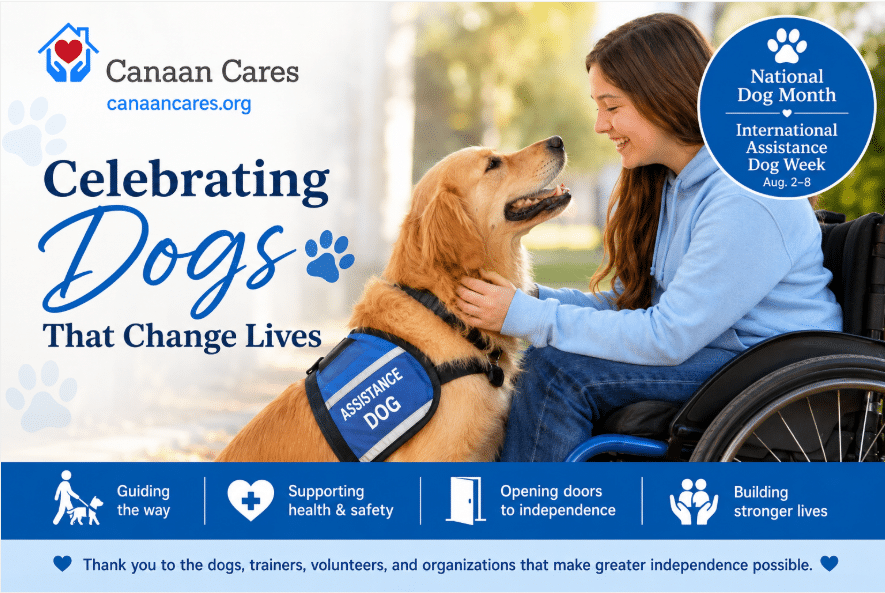
Every August, we celebrate National Dog Month, a time to recognize the joy, companionship, and unconditional love dogs bring into our lives. It’s also an opportunity to honor International Assistance Dog Week (August 2-8), which recognizes the extraordinary dogs that help individuals with disabilities live with greater independence, confidence, and safety.
At Canaan Cares, we know that assistance dogs are much more than loyal companions. They are highly trained partners who help people of all ages and abilities navigate everyday life.
More Than a Best Friend
For centuries, dogs have worked alongside humans, but today’s assistance dogs are specially trained to perform life-changing tasks. Depending on a person’s unique needs, they may:
- Guide individuals who are blind or have low vision.
- Alert people who are deaf or hard of hearing to important sounds.
- Detect and respond to medical conditions such as seizures or changes in blood sugar.
- Retrieve dropped items, open doors, or assist with mobility.
Provide support for individuals with physical, developmental, or other disabilities by performing specific trained tasks that increase independence.
Behind Every Great Assistance Dog Is a Dedicated Team
During International Assistance Dog Week, we also want to recognize the incredible puppy raisers, trainers, volunteers, and organizations who devote countless hours to preparing these remarkable dogs.
Training an assistance dog often takes 18 to 24 months of specialized instruction before they are ready to be matched with the individual they will serve. That dedication transforms lives every single day.
Thank you to everyone who helps these amazing dogs learn to recognize medical alerts, respond to emergencies, provide mobility support, and perform the many tasks that make greater independence possible.
Did You Know?
- International Assistance Dog Week has been celebrated since 2009 to honor assistance dogs and raise public awareness of the important roles they play.
- Assistance Dogs International’s accredited member organizations currently support more than 27,000 active assistance dog teams worldwide, with thousands of new partnerships created each year.
- When you see a working assistance dog, it’s important not to pet, distract, or interact with the dog without first asking the handler. Even a brief distraction can interfere with the dog’s ability to safely perform its job.
Canaan Cares Is Here to Help
Finding the right resources can sometimes feel overwhelming, but families don’t have to navigate the journey alone.
Whether you’re exploring disability services, Regional Center supports, early intervention, benefits, advocacy organizations, or other community resources, Canaan Cares is here to help connect individuals and families with the information and services they need.
This National Dog Month and International Assistance Dog Week, we celebrate the remarkable partnership between assistance dogs and the people whose lives they enrich every day. We also extend our heartfelt gratitude to the trainers, volunteers, organizations, and families whose dedication helps make those partnerships possible.
Together, we’re building more inclusive communities where every individual has the opportunity to live with greater independence, dignity, and support.
If you are interested in the self-determination program in Escondido, CA, please contact the compassionate staff at Canaan Cares today: (858) 345-6546.
Canaan Cares proudly serves California Regional Centers throughout San Diego, Poway, Oceanside, Escondido, Carlsbad, El Cajon, Vista, Solana Beach, Encinitas, La Mesa, and Los Angeles, Orange, San Bernardino, San Diego, and Riverside Counties.
To begin the eligibility process in your region, contact:
San Diego Regional Center
(858) 576-2996
Regional Center of Orange County
(714) 796-5100
Inland Regional Center
(909) 890-3000
Harbor Regional Center
(310) 543-0100
South Central Los Angeles Regional Center
(213) 744-7000
Eastern Los Angeles Regional Center
(626) 299-4700
Lanterman Regional Center
(213) 383-1300
Westside Regional Center
(310) 258-4000
Families may call any office for support, and staff will direct you to the correct intake coordinator.
